
Rotisserie prime rib is a beautiful piece of beef slathered down in garlic herb-basting butter. The prime rib roast is melt-in-your-mouth tender with a blushing pink center with an aromatic smoky, crunchy crust on the outside.
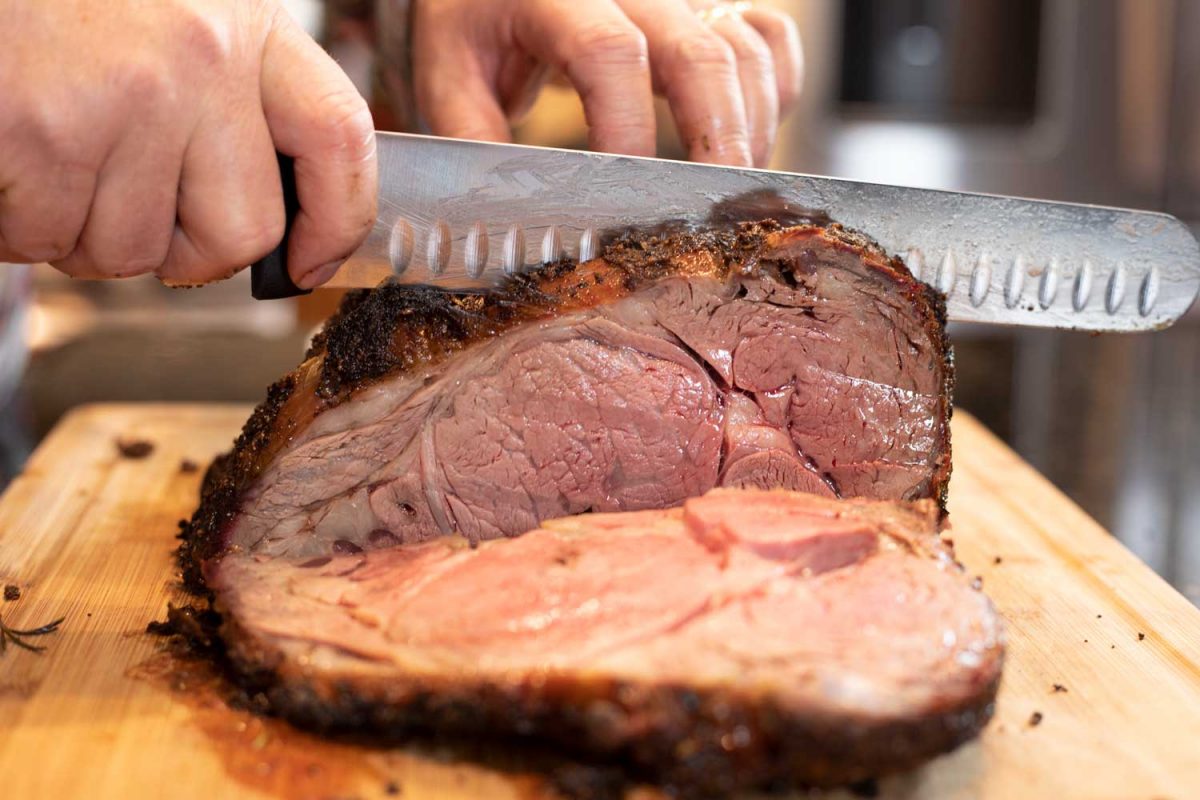
There’s nothing more mesmerizing than to watch a prime rib roast rotate on a spit, slowly roasting over the warm glow of a charcoal grill. Using a rotisserie unit is a great way to grill a very tender and extremely juicy prime rib full of flavor. The rotation of the meat keeps all of the glorious juices basting the meat to lock in flavor and give it a magnificent smoky crust.
This recipe calls for an aromatic garlic herb butter for basting that adds even more flavor to produce the most amazing standing rib roast you have ever tasted.
A standing rib roast may seem somewhat intimidating. It’s a pretty hefty chunk of expensive meat, so you don’t want to mess it up. The good news is that grilling a prime rib is not difficult to make at all.
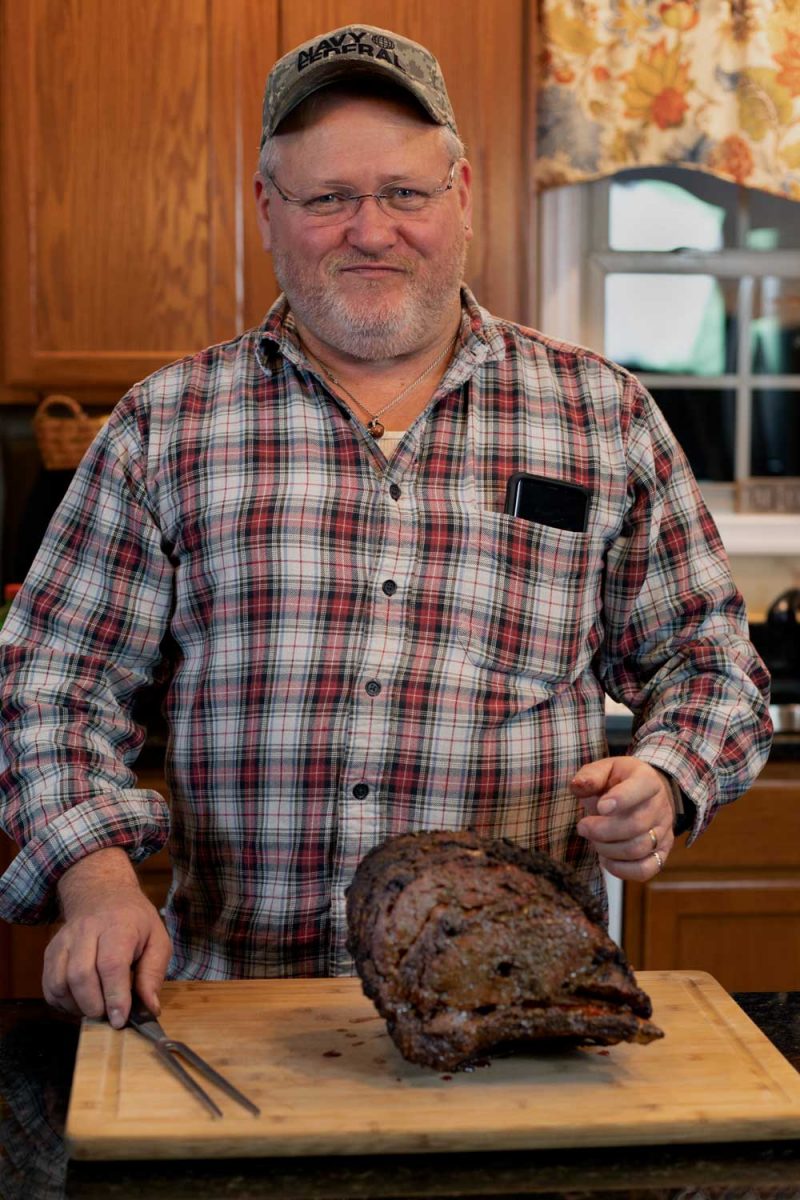
We are sharing this step-by-step guide about how we made rotisserie prime rib so that you can grill a tender and juicy standing rib roast of your own this holiday season or any special occasion.
Let us guide you to the best prime rib you’ve ever tasted using your backyard charcoal grill!
What Cut of Beef Is Prime Rib?
Prime Rib was originally known as “Standing Rib Roast” because the cut of meat is roasted “standing” on the rib bones.
A Prime rib has a large “eye” of meat in the center richly marbled with fat. That eye has a fat-marbled muscle around it, and a thick fat cap surrounds the whole cut of meat.
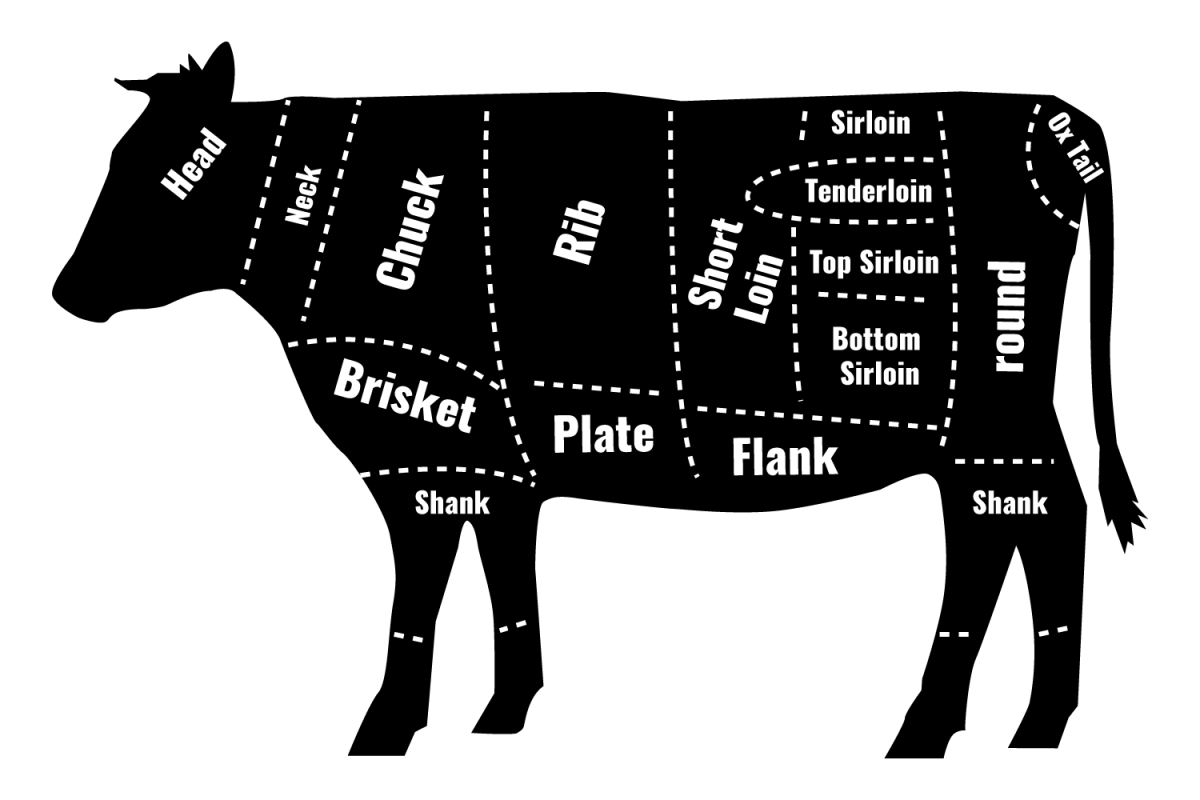
This cut of meat comes from the primal rib section of a cow located behind the shoulder above the lower back. A cow has thirteen ribs on each side. Ribs 1-5 are the chuck section. The next seven ribs (6-12) are the rib section, and the 13th is part of the loin. Ribs 6 through 12 are the prime rib.
Prime rib is tender, juicy, and extremely flavorful because the muscles aren’t worked as heavily as other muscles because of where the muscle is on the cow’s body.
A whole standing rib roast is enormous and can weigh over twenty pounds! That’s why butchers often divide the roast into two smaller roasts called the first cut and the second cut.
Here are the differences between the two cuts:
First Cut:
- Closer to the loin end
- Consists of 10-12 ribs
- Most desirable and appealing when sliced because it contains a large single ribeye muscle.
- Also known as “loin end” or “small end”
Second Cut:
- Closer to the chuck end
- Consists of 6 to 9 ribs
- Made up of a variety of different muscles that are not as uniform and attractive when sliced.
- Contains more connective tissue.
- Still a great chunk of meat because of its fatty pockets, which add great flavor.
- Also known as “large end”
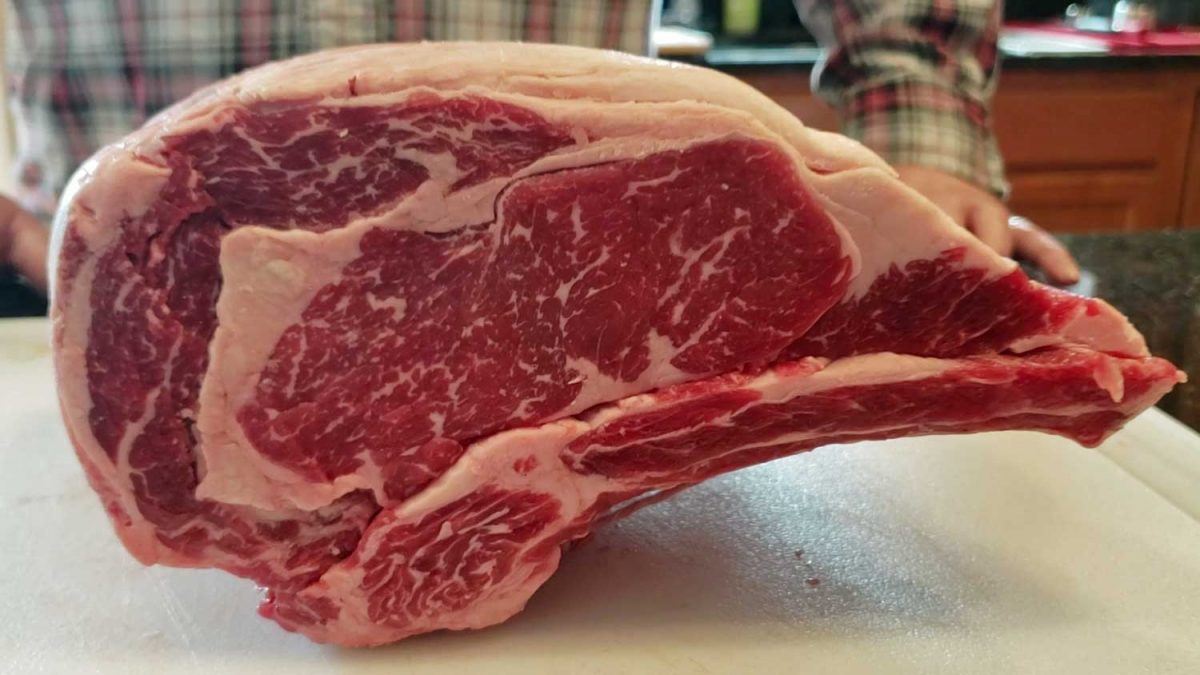
How to Shop for a Standing Rib Roast
When shopping for prime rib, ask for a “standing rib roast.” That’s usually how you will find it labeled at the butcher counter.
How Much Prime Rib Do I Need?
Typically you will need about 1 pound per adult and ½ pound per child.
Bone-In, Boneless or Tied?
This recipe will work fine whether bone-in or out or tied back on.
You will find that butchers remove the bone then tie it back on. When the bone is tied back on, it allows the meat to be just as juicy as if it were still attached but makes it a lot easier to carve when it’s time for serving.
David and I both believe that anything cooked with a bone is much juicier, so we highly recommend that you purchase one with the bones. For all us carnivorous folks, they’re great for gnawing!
What’s the Difference Between Prime or Choice Grade?
Beef is graded in two ways: Quality grades and Yield grades. Quality is the grade a cut receives for tenderness, juiciness, and flavor. Yield is the grade a cut received for the amount of usable lean meat.
Prime Beef: The highest quality grade given by the USDA. The meat has an abundance of marbling (the amount of fat spread throughout the lean meat). Prime roasts are ideal for dry-heat cooking grilling.
Choice Beef: High quality, but with less marbling than Prime. However, choice roasts from the loin and rib are still tender, juicy, and flavorful and are suited for dry-heat cooking.
Learn more about beef grading HERE!
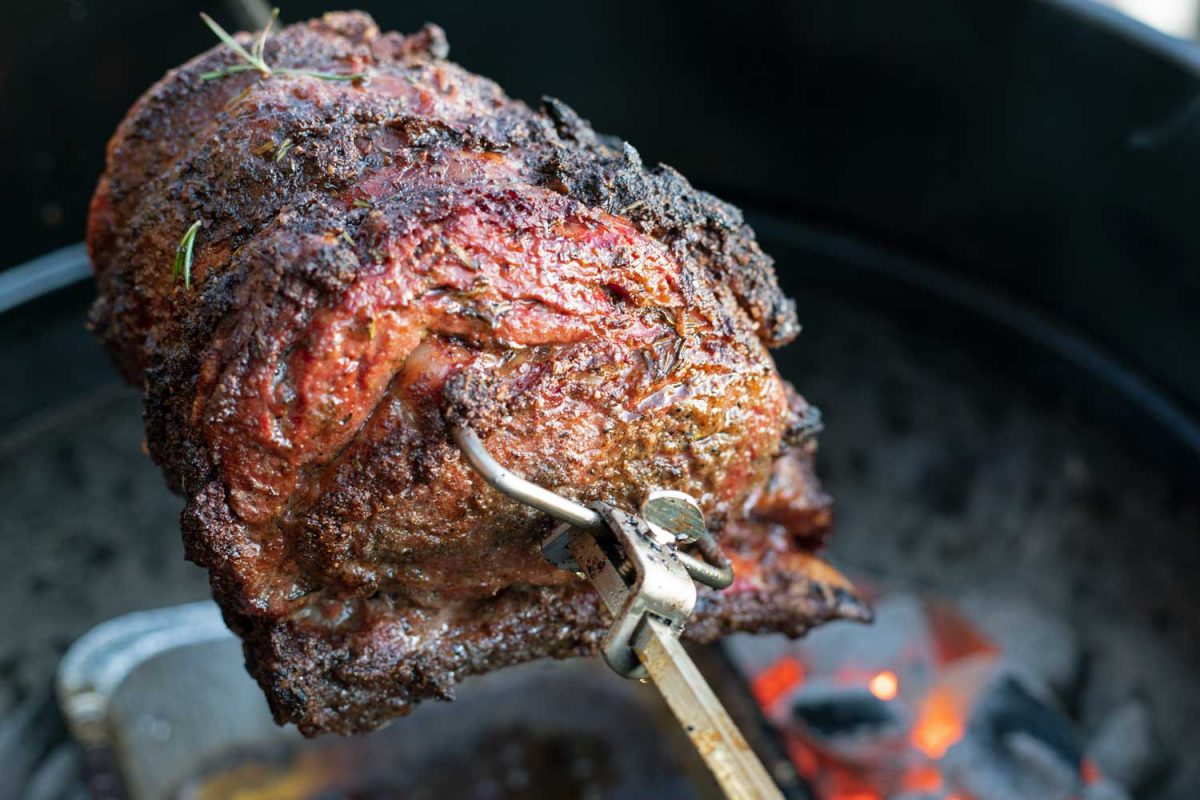
What If I don’t have a Rotisserie?
For this recipe, we use a 22-inch Weber Rotisserie for the Weber Performer.
You can still grill prime rib if you don’t have a rotisserie. Simply grill indirectly fat side up and bone side down.
Grilling indirectly without a rotisserie requires turning the prime rib periodically to ensure the meat cooks evenly. We recommend following our method and rotating the meat whenever you baste it.
You could also grill it indirectly and reverse sear it like our Smoked Beef Tenderloin recipe.
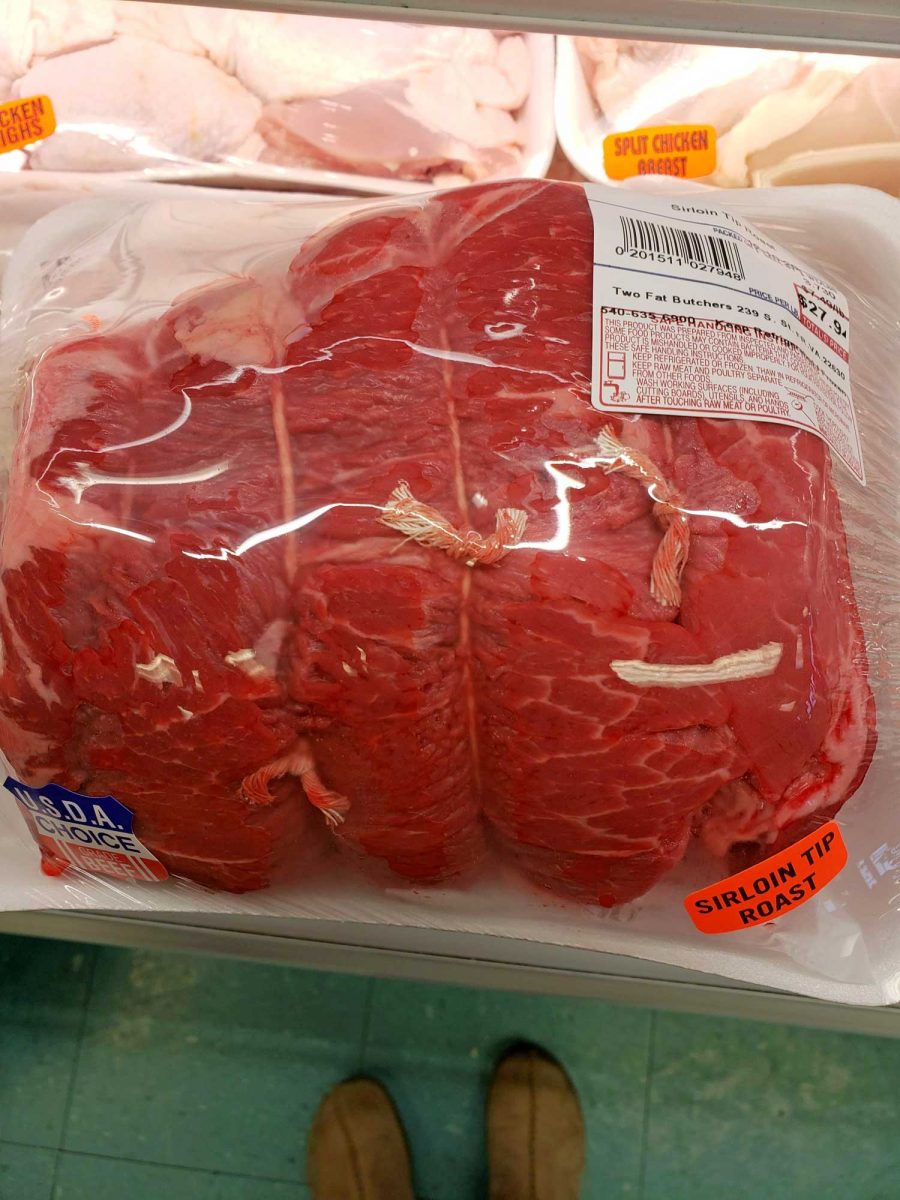
PRACTICE ON CHEAPER CUTS OF BEEF FIRST!
We cannot stress this enough. Before going out and spending lots of money on prime rib, it’s in your best interest to practice this recipe on cheaper cuts of beef first! It could save you lots of money on spoiled meat and the agony of seeing a bunch of hungry folks when something goes awry at the grill on the day of the feast.
We tested this recipe using a sirloin roast before purchasing the prime rib for the recipe. Hell no, sirloin will never be prime rib, but practicing on a cheap cut can help you understand the grill and the meat so you know what to expect beforehand.
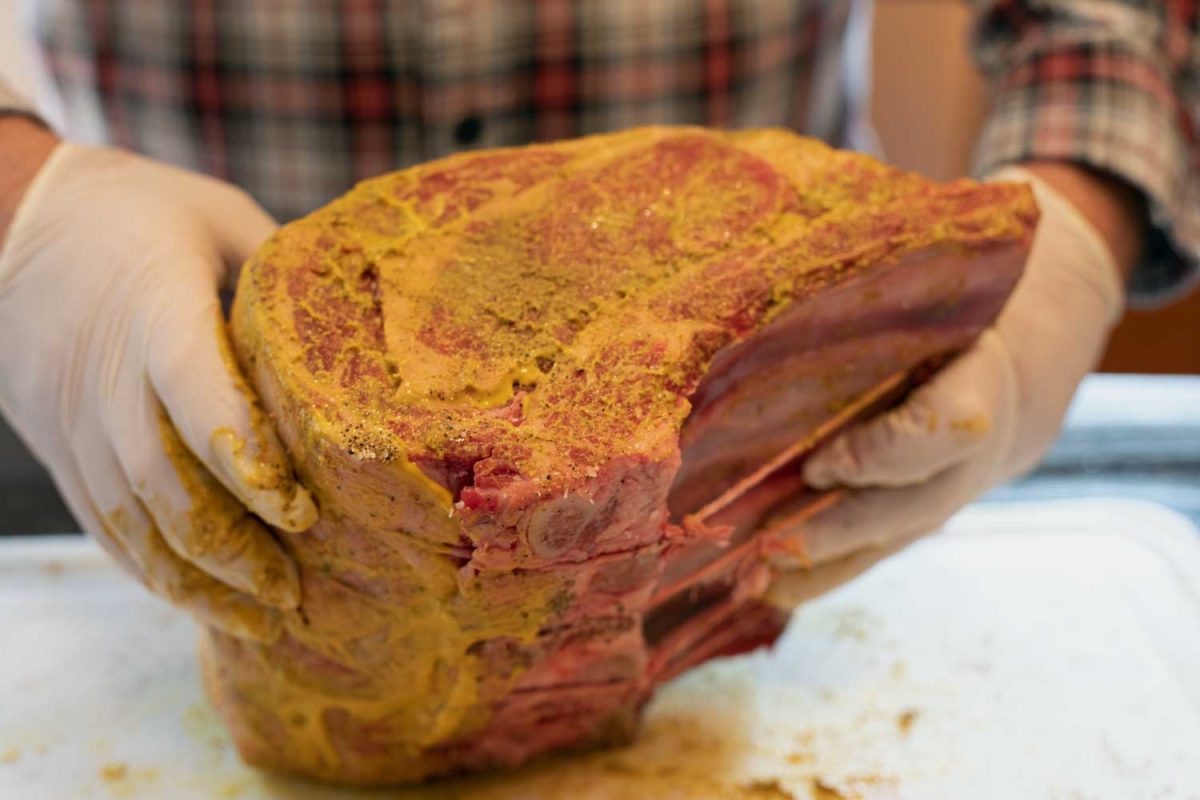
What’s a Binder?
By definition, a binder is an ingredient that helps a mixture hold its shape or remain bound together. Regarding smoking meat, a binder is applied to the outside of the meat to help a dry rub adhere and not fall off.
Using a binder is a matter of personal preference. We typically use prepared yellow mustard. It does not affect the taste of the meat; it just acts as an adhesive so that the dry rub stays on the meat and doesn’t fall off before it even hits the smoker.
What’s a Good Dry Rub for Prime Rib Roast?
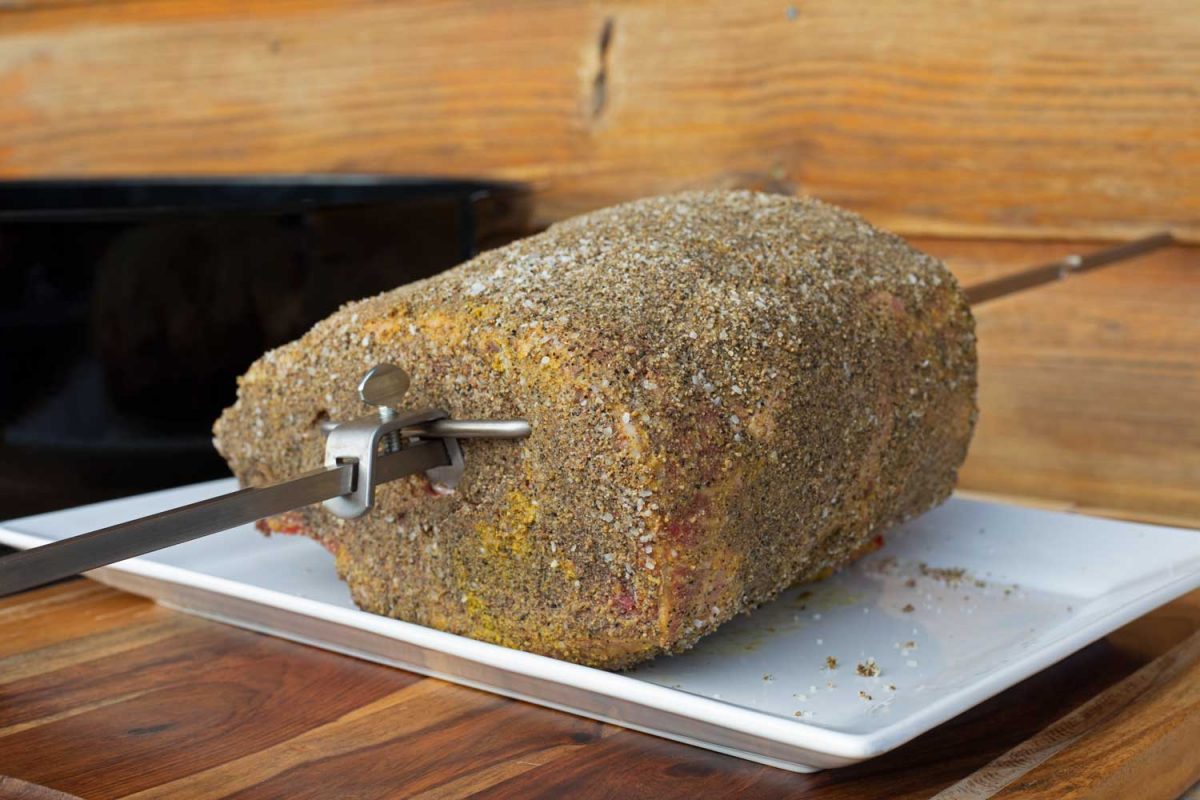
The true taste of prime rib does not need to be masked. Unlike our brisket rub, we keep it simple by using equal parts salt, pepper, and garlic powder.
Target Internal Temperature for Prime Rib and When to Pull
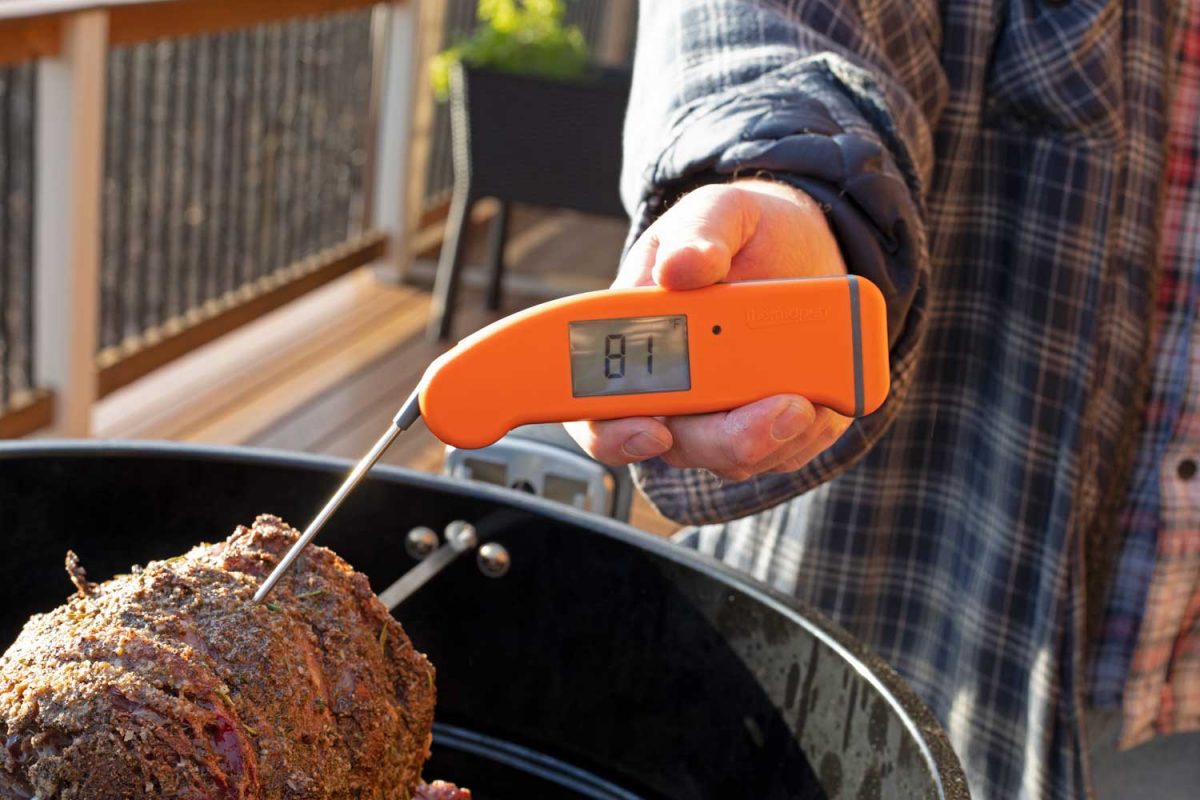
The internal temperature of a prime rib will rise about 5-7 degrees F while resting, so it needs to be pulled off the grill before reaching the target temperature. Reference the chart below for target internal temperatures and doneness:
| Preferred Doneness | Pull Temp | Target Temp |
| Rare | 115-124°F | 120-129°F |
| Medium rare (recommended) | 125-129°F | 130-134°F |
| Medium | 130-139°F | 135-144°F |
| Medium well | 140-149°F | 145-154°F |
| Well done | NA | NEVER! |
Target Temperature: this is the internal temperature of the meat after resting
Pull Temperature: – this is the internal temperature the meat should be when you remove it from the grill to achieve the level of doneness you prefer.
Watch Our Video on How to Make Rotisserie Prime Rib
Helpful Equipment and Supplies
- 22-inch Weber Grill
- 22-inch Weber Rotisserie
- Charcoal
- Charcoal Chimney
- Charcoal Baskets
- Instant-read thermometer
- Grilling Gloves
- Disposable Gloves
- Utility Tongs
- Mini Saucepan
- Grilling Brush
- Poultry Shears
Ingredients Needed for this Recipe
- 7 pound Standing Prime Rib Roast, trimmed and tied
- Mustard or olive oil for a binder, or use your binding agent of choice (optional)
- The Prime Rib Dry Rub: Equal parts Kosher Salt, Freshly Cracked Black Pepper, and Garlic Powder.
- Garlic Herb Basting Butter: unsalted butter, extra-virgin olive oil, fresh thyme, fresh rosemary, fresh garlic, and soy sauce.
How to Grill Prime Rib On a Rotisserie
Servings: 7 | Prep Time: 10 Minutes | Cook Time: 2 hours
Rub the Meat:
- If the beef is completely dry, liberally apply a thin layer of yellow mustard (or binding agent of choice) to the meat before applying the rub.
- Coat the outside of the mustard-coated meat generously with the prime rib dry rub.
- Transfer the meat to a platter and place it inside the refrigerator for at least one hour before cooking. Rubbing the meat in advance will allow the meat to take on the seasoning and form a crust.
Fire Up the Grill:
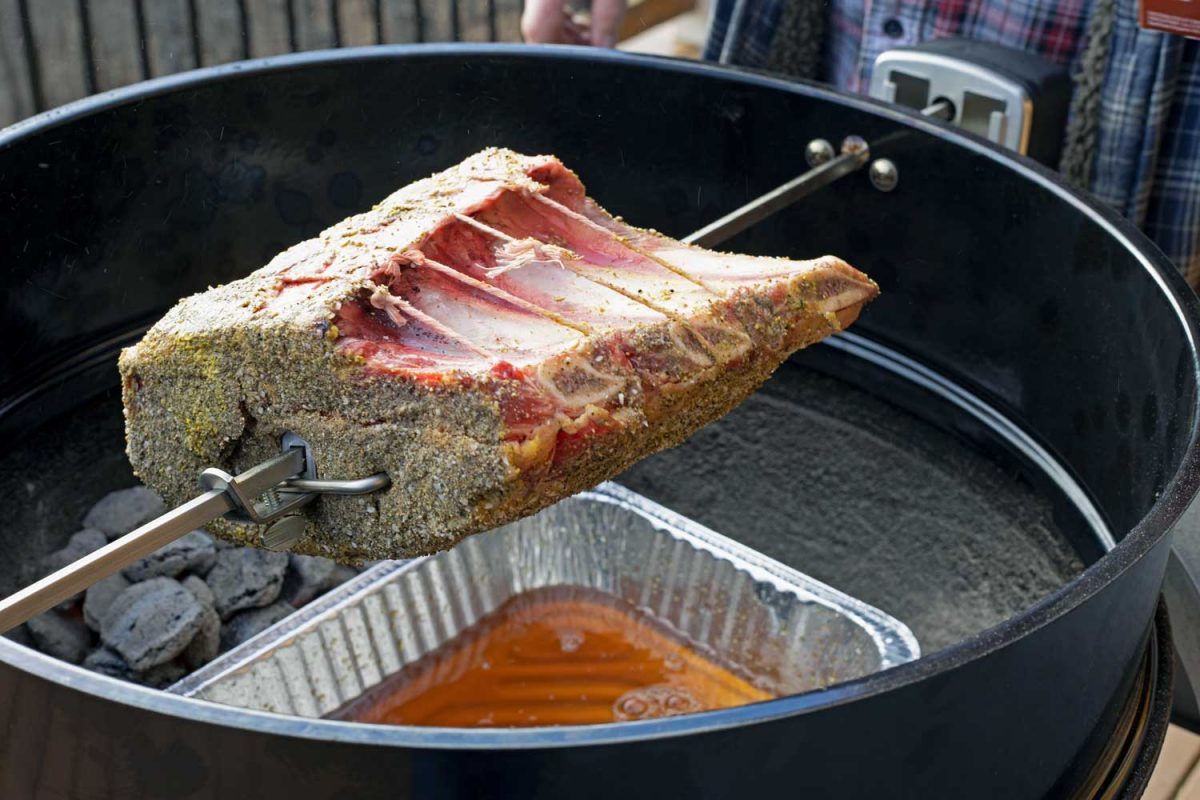
Prepare the grill for a 3-zone split fire. To make this setup, put one charcoal basket of charcoal on each side of the grill. Place a drip pan in the center of the two baskets to catch the drippings from the meat (see the video above for a demonstration).
- For high heat, light a charcoal chimney starter full of charcoal.
- When the charcoal is covered in ash, pour it equally into the charcoal baskets on each side of the grill and put an aluminum drip pan in the middle of the two baskets.
Note: We tried adding some beef stock to the pan before smoking the meat in hopes of creating an au jus. It was an unsuccessful attempt, and we do not recommend it at this time.
- Preheat the grill to 325-350 degrees F.
- Set up the rotisserie according to the manufacturer’s instructions.
- Center the roast on the rotisserie spit and secure it with the spit forks. Give the spit a few twirls in your hands to ensure even turning and that it is centered well before tightening the forks all the way.
- Put the spit on the rotisserie, and start the motor. Let the roast rotate a couple of times to ensure it turns evenly. Place the lid on and grill it over indirect heat for 20-30 minutes.
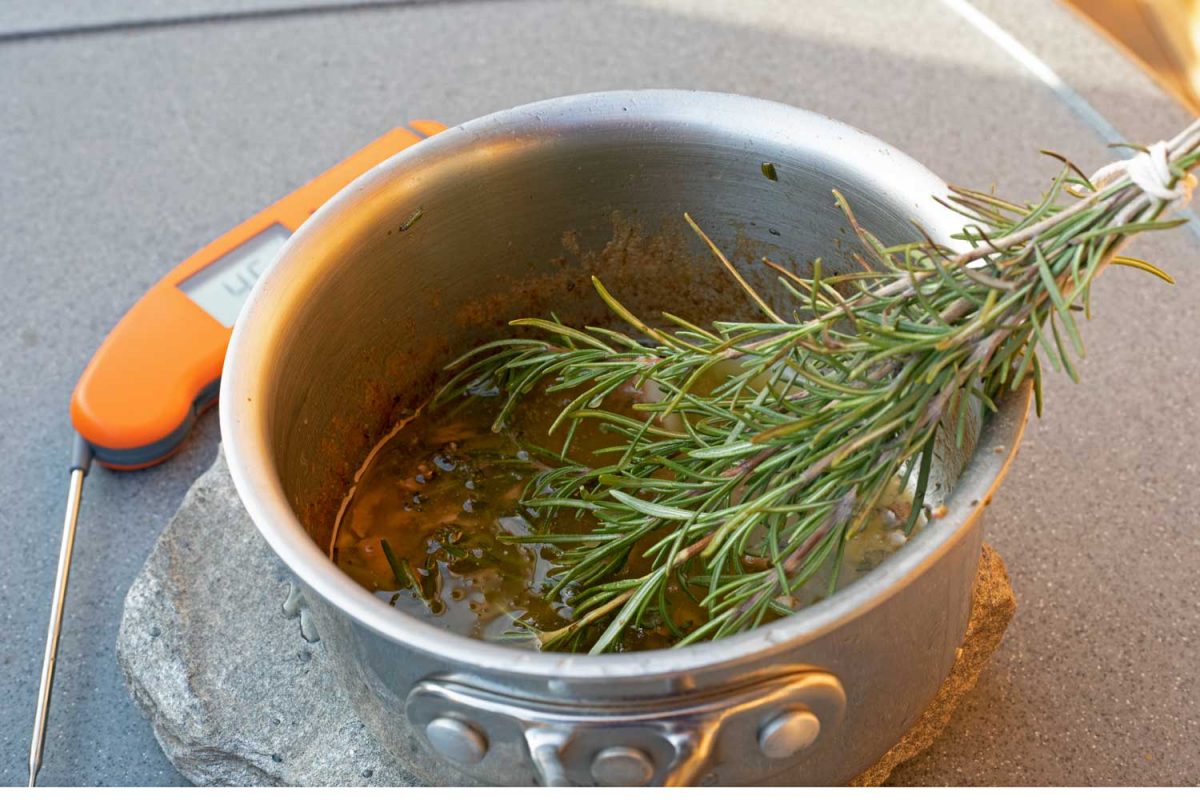
- Meanwhile, prepare the garlic herb basting butter. Over medium-low heat, add the butter, olive oil, thyme, rosemary, garlic, and soy sauce in a small pot. Heat until the butter melts and becomes fragrant. Be careful not to get the butter too hot; it will burn and scorch the garlic. Turn off the heat and set it aside until needed.
How to Make an Herb Brush:
You can use a grilling/basting brush and skip to Step 8 or make a herb brush to baste the meat.
You’ll need the following:
- 5-6 long sprigs of rosemary, about 6-12-inch pieces
- butcher’s twine
Remove the first 2-3 inches of green needle-like leaves from the rosemary; discard or use them for another time. Then gather the sprigs of thyme and rosemary together and tie them into a bundle along the woody stem of the rosemary with butcher’s twine. Set aside until needed.
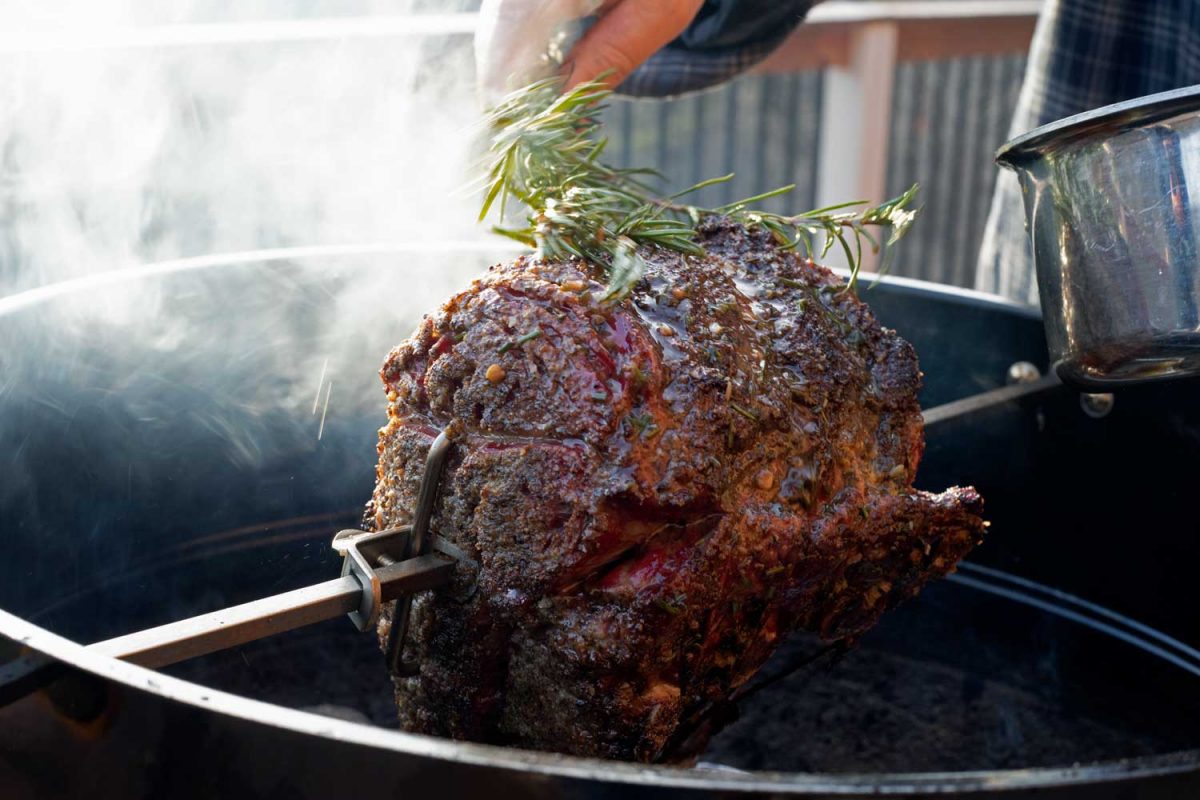
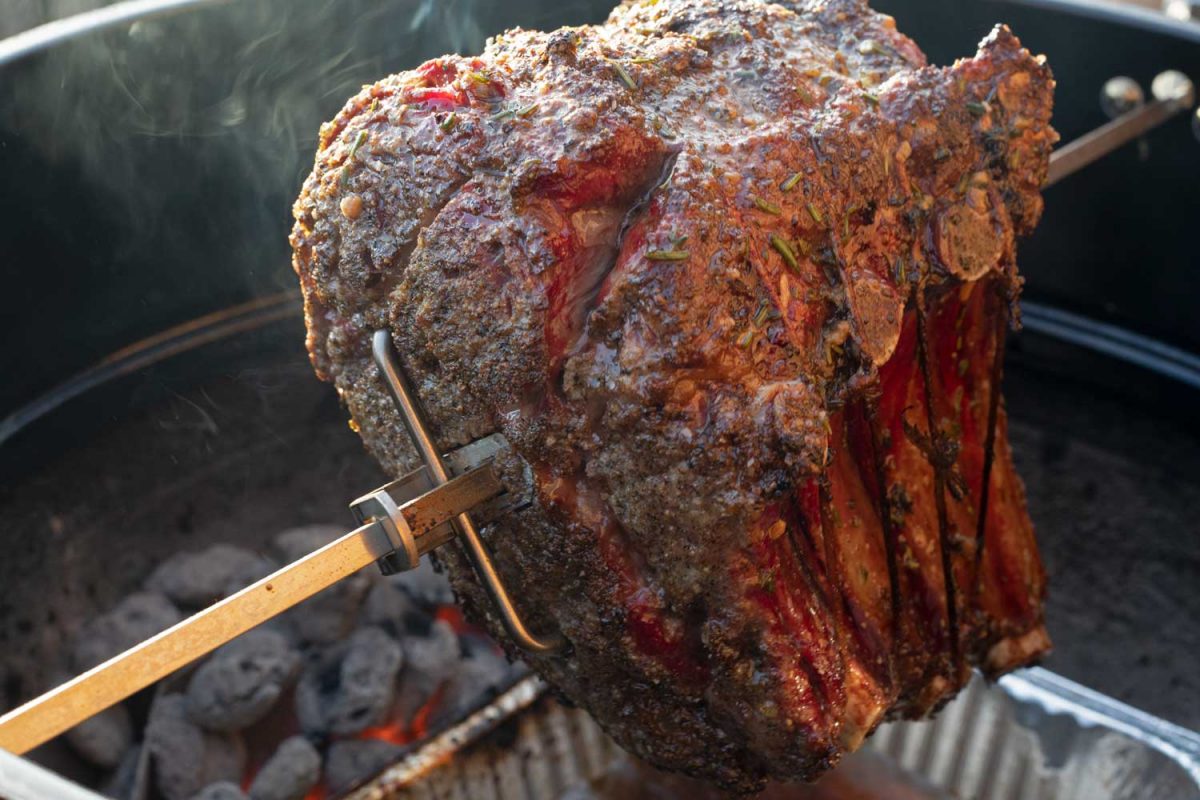
- Remove the lid from the grill and baste the roast with the basting butter. (Rotate the meat if you are not using a rotisserie) Close the grill and continue to grill, basting every 30 minutes until the internal temperature is 130-135 degrees F for medium-rare when read with an Instant-Read Thermometer; about 1 ½ to 2 hours.
- Transfer the roast from the spit to a carving board. Tent with foil and allow it to rest at least 20 minutes before carving.
- Carve and serve warm.
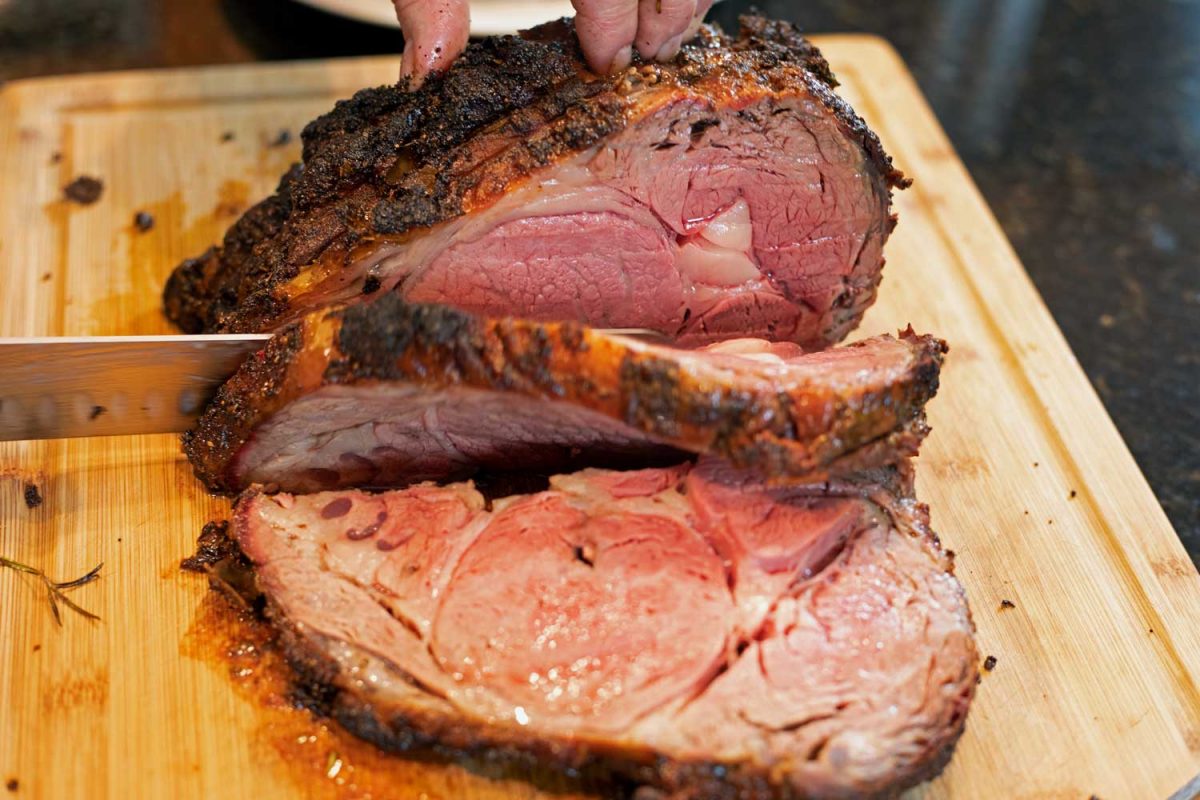
Our 7-pound roast took almost 2 hours to get to 130 degrees F with a grill temperature running between 325-350 degrees F. After the first hour, check the temperature and monitor it each time you baste the meat. Shorten the increments between basting when the meat nears the done temperature.
This recipe is a great way to free up your crowded oven this holiday season. Now that we have guided you through, go ahead and fire up that grill and start practicing on a sirloin tip!

Rotisserie Prime Rib With Garlic Herb Basting Butter
Useful Equipment:
- Charcoal
Ingredients
- 7 pound Standing Prime Rib Roast trimmed and tied
- Mustard or olive oil for a binder or use your binding agent of choice (optional)
For The Prime Rib Dry Rub:
- 2 tablespoons Kosher Salt
- 2 tablespoons Freshly Cracked Black Pepper
- 2 tablespoons Garlic Powder
Garlic Herb Basting Butter:
- 1 cup unsalted butter (1 stick) sliced into tablespoons for easy melting
- ¼ cup extra-virgin olive oil
- 2 tablespoons fresh thyme
- 2 tablespoons fresh rosemary
- 6 cloves fresh garlic minced
- 1 dash soy sauce
Instructions
Rub the Meat:
- If the beef is completely dry, liberally apply a thin layer of yellow mustard (or binding agent of choice) to the meat before applying the rub.
- Coat the outside of the mustard-coated meat generously with the prime rib dry rub.
- Transfer the meat to a platter and place it inside the refrigerator for no less than one hour before cooking. Rubbing the meat in advance will allow the meat to take on the seasoning and form a crust.
Fire Up the Grill:
- Prepare the grill for a 3-Zone Split Fire. To make this set up, put one charcoal basket of charcoal on each side of the grill. Place a drip pan in the center of the two baskets to catch the drippings from the meat (the video above for a demonstration).
- For high heat, light a charcoal chimney starter full of charcoal.
- When the charcoal is covered in ash, pour it equally into the charcoal baskets on each side of the grill and put an aluminum drip pan in the middle of the two baskets.
- Preheat the grill to 325-350 degrees F.
- Set up the rotisserie according to the manufacturer’s instructions.
- Center the roast on the rotisserie spit and secure it with the spit forks. Give the spit a few twirls in your hands to ensure even turning, and that is centered well before tightening the forks all the way.
- Put the spit on the rotisserie, start the motor. Let the roast rotate a couple of times to ensure it turns evenly. Place the lid on and grill it over indirect heat for 30 minutes.
Prepare the Garlic Herb Basting Butter
- Meanwhile, prepare the garlic herb basting butter. Over medium-low heat, add the butter, olive oil, thyme, rosemary, garlic, and soy sauce in a small pot. Heat until the butter melts, and it becomes fragrant. Be careful not to get the butter too hot, or it will burn and scorch the garlic. Turn off the heat and set it aside until needed.
- You can use a grilling/basting brush or make a herb brush to baste the meat. Remove the lid from the grill and baste the roast with the basting butter. (Rotate the meat if you are not using a rotisserie) Close the grill and continue to grill, basting every 30 minutes until the internal temperature is 130-135 degrees F for medium-rare when read with an Instant-Read Thermometer; about 1 ½ to 2 hours.
Rest and Carve
- Transfer the roast from the spit to a carving board. Tent with foil and allow it to rest at least 20 minutes before carving.
- Carve and serve warm.
Notes
- 5-6 long sprigs of rosemary about 6-12-inch pieces
- butcher’s twine




Don Crane says
Excellent advice. Well written. You definitely enriched the lives of all of us!!!
The Mountain Kitchen says
What a great compliment, Don. Thank you!
Chuck says
Can you use a gas weber or smoker?
The Mountain Kitchen says
Hi Chuck! Yes, you can. Just use the same principles we show here and monitor your temperature, as that is more important than the amount of time. Enjoy!
MaryBeth says
Thank you!!! We needed instruction and your recipe/video is excellent! Making this for Easter Sunday!
The Mountain Kitchen says
Thank you MaryBeth! Happy Easter!
Ted says
Herb butter basting was a new addition to what I’ve done in prior rib roasts on the Weber kettle.
Turned out even more delicious. Thank you
Mark M says
10.4 lb boneless prime rib.
Dry rubbed night before, about 12 hours before cook time.
I had my infrared burner on high and used the farthest rotisserie placement on my 30″ Lynx NG grill. I did not preheat it use the burners at all.
Exactly 3 hours to get thinner side to 130f and 125f on the other.
Followed the basting recipe and applied every 30 minutes. Pro tip, I left the small pan on the front of the grill so it stayed warm and used a brush to coat PR.
Pulled it, rested 1/2 hour and sliced.
Huge success and crowd pleaser.
It fed 12 adults with no issue and still have plenty for leftovers.